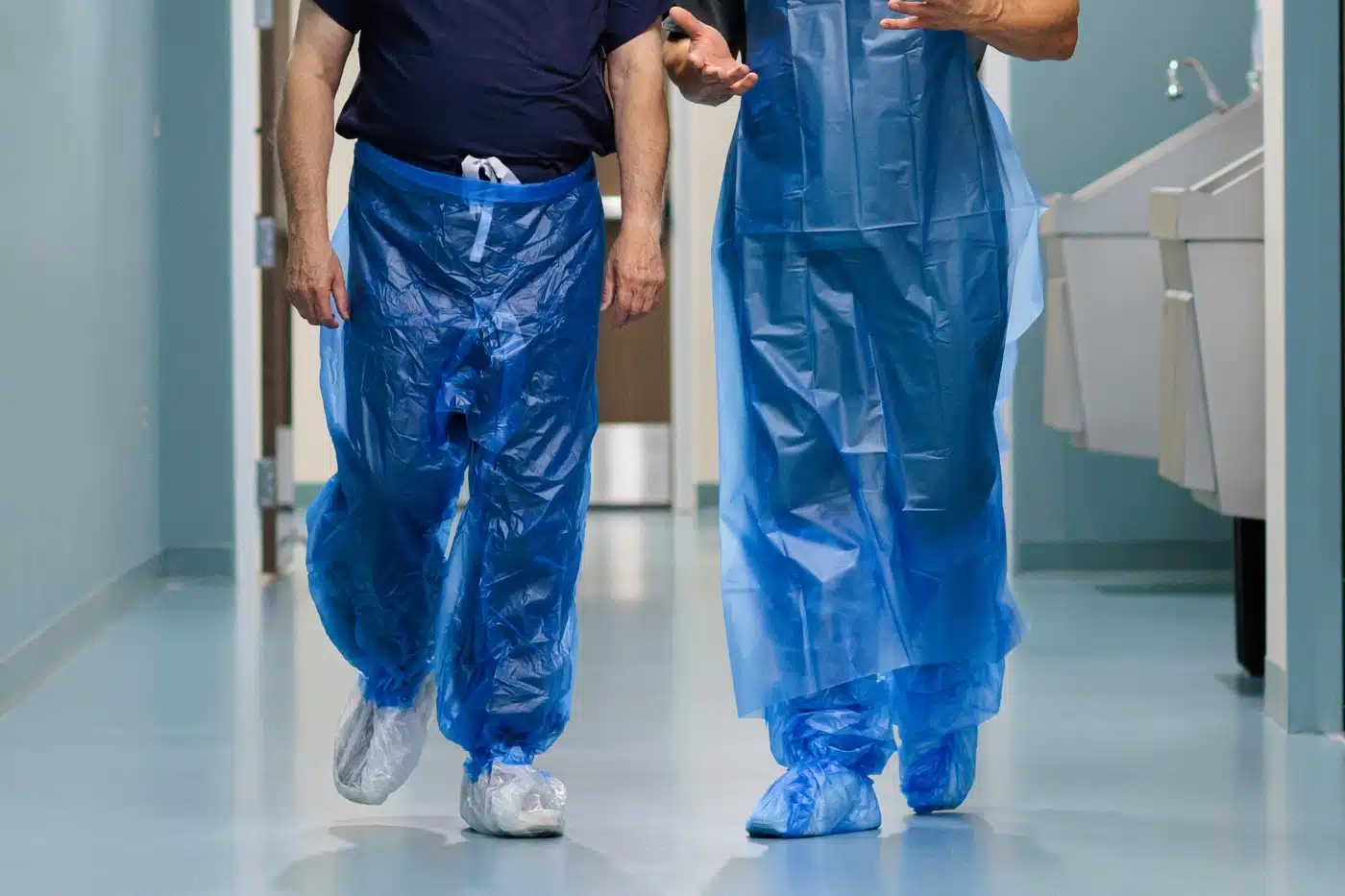
It’s back in the news. We hope it isn’t back in your facility. Yes, the threat of Candida auris looms large once again over healthcare facilities across the United States. Although c.auris infections were trending down in the early 2020s, reports to the CDC over the last eight months indicate a significant uptick in detection rates and new clinical cases.
Approximately 7,169 clinical cases of the drug-resistant fungus Candida auris (C. auris) were identified in the United States in 2025, according to CDC data. This represents a significant increase—over 50%—from 2024, with cases heavily concentrated in Nevada and California, which each reported around 1,500 to 1,600 cases.
The Superbugs: The Dangers of Candida auris
Candida auris is a global health threat, earning the ominous status of “superbug,” primarily due to its multidrug-resistant nature. Unlike many common fungal infections, C. auris is resistant to most available antifungal medications, severely limiting treatment options. Worse, it’s hardy: it can linger, viable, on surfaces and medical equipment for extended periods, making it exceptionally difficult to eradicate from healthcare environments.
Hospitals are full of at-risk populations, too. People with compromised immune systems, such as those undergoing chemotherapy, organ transplant recipients, or patients with HIV/AIDS or other immunocompromising conditions, are all at increased risk. Plus, individuals with invasive medical devices like catheters or ventilators, and those who have had prolonged hospital stays, are particularly vulnerable to C. auris infection.
Treatment options for C. auris are challenging. While mild cases might be treatable with a single antifungal drug, severe infections, particularly candidemia (a bloodstream infection), often require high doses of echinocandins, amphotericin B, or a combination of antifungals.
Even with aggressive treatment, the prognosis can be grim. The estimated in-hospital mortality rate for C. auris candidemia ranges from 30% to 70%, especially in critically ill patients [MDPI, 2026]. Invasive infections with C. auris have caused death in about one in three persons who developed severe disease in Missouri, according to the Missouri Department of Health & Senior Services, 2026.
Fortunately, medicine is always advancing. In December 2025, scientists found a weak spot in the deadly fungus and hope to develop a treatment that can stop it in its tracks.
In the meantime, the high mortality rate alone requires more stringent infection prevention and control measures for healthcare facilities and departments serving vulnerable populations.
Transmission Routes & Risk Factors in Hospitals and Healthcare Environments
Candida auris spreads like anything: through direct contact with infected or colonized individuals and through contact with contaminated environmental surfaces.
C. auris can survive on environmental surfaces and medical equipment for several weeks to months. Studies have shown it can survive on surfaces like plastic, steel, and fabric for at least 14 days, with some strains remaining viable for over a month – and it remains viable and infectious that whole time.
In hospitals, nursing homes, and long-term care facilities, where patients often have weakened immune systems or invasive medical devices, preventing the spread of disease and possible cross-contamination is the only way to get ahead of C. auris. Once it’s been spread from a patient to a treatment surface, shoe sole, or instrument… the outbreak has begun.
How Impermeable Disposable PPE Intercepts & Disrupts the C. auris Lifecycle
Given Candida auris‘s resilience, your infection control protocols need to be bulletproof. In essence, an ounce of Personal Protective Equipment (PPE) is worth a pound of treatment here.
The right, layered PPE approach provides a critical barrier, intercepting the pathogen before it can reach healthcare staff or contaminate the environment. The effectiveness of this barrier hinges on the quality and types of PPE used, with impermeability and disposability being key in winning the fight against this superbug.
Prevent Direct Contact: The Immediate Barrier
Impermeable personal protective equipment is your immediate barrier, preventing direct physical contact between healthcare workers, patients, and potentially contaminated surfaces or bodily fluids. It’s also the best way to interrupt the transmission chain of Candida auris.
Wear appropriate PPE (keep reading for the full list) and follow the correct donning & doffing protocol. By doing so, you’ll create a physical shield that isolates any infectious agent and safely contains it, thus protecting yourself and preventing the pathogen from being transferred to other patients or environments.
Impermeable Materials Are Essential Against C. auris
Impermeability is essential because Candida auris spreads through microscopic fungal spores. The tiny particles can easily penetrate materials that aren’t specifically designed to block them. Scrubs might repel liquids, specially if they’re marked as water-resistant or fluid-repellant, but they may not stop these tiny fungal particles – or other bloodborne and fluidborne pathogens.
What Does “Impermeable” Mean When You’re Shopping for PPE?
The key benchmark for assessing PPE impermeability is the ASTM-F1671 standard. The whole test name is “Standard Test Method for Resistance of Materials Used in Medical Gowns and Protective Apparel to Bacterial Penetration,” and in essence, an independent lab blasts the PPE material with a control bacterial pathogen. If none of the tiny particles make it through the material, it’s impermeable and earns its ASTM-F1671 certification.
While tests for bacterial penetration, fungal spores are generally larger than bacteria, which means you’ll be protected against C. auris, too.
Don’t Forget to Eliminate Cross-Contamination Risk
The disposability of PPE is as crucial as its impermeability in preventing the spread of Candida auris. Reusable items like patient transfer boards or mattress sheets can hold onto pathogens, even after cleaning and disinfection, due to human error. C.auris is notoriously difficult to eradicate with common disinfectants.
Using disposable barrier-type PPE on surfaces, like mattress covers and patient transfer sheets, ensures that any C. auris fungus present in/on the patient is discarded after a single use.
The Impermeable Disposable PPE You Need for C. auris Control
Controlling Candida auris relies on the consistent and correct use of specific impermeable disposable PPE. A layered approach provides maximum protection against this resilient pathogen.
Which types of impermeable disposable PPE are recommended for protection against Candida auris?
The following impermeable disposable PPE items should be part of your Candida auris infection control protocol:
- Aprons
- Gowns
- Coveralls
- Booties/Shoe covers
- Disposable impermeable mattress covers
- Disposable patient transfer sheets
Aprons, Gowns, and Coveralls: Comprehensive Body Protection
Impermeable aprons, gowns, and coveralls keep pathogens (and unpleasant fluids) off healthcare workers’ bodies and clothing.
Gowns should be worn during any activity where contamination of clothing is possible, particularly when caring for patients under Contact Precautions. Impermeable gowns, extending to the mid-thigh or knee, offer a good base for your PPE kit.
For higher-risk procedures or environments with significant contamination potential, impermeable coveralls offer even more coverage, ensuring no skin or clothing is exposed. These should be worn during patient contact, care, and when handling potentially contaminated materials when the presence of C. auris is known.
Mattress Covers and Patient Transfer Sheets
Disposable impermeable mattress covers are the most efficient way to prevent the environmental contamination of patient beds, a known and notorious reservoir for C. auris.
These covers should be changed between patients and whenever they become soiled or damaged. Similarly, disposable, impermeable patient transfer sheets are essential. They create a barrier when moving patients between beds, gurneys, or chairs, preventing direct contact with potentially contaminated surfaces and reducing the risk of pathogen spread during patient mobility.
Booties, Knee Highs, and Shoe Covers
Foot and leg protection is often overlooked. Gloves get all the glory.
Impermeable booties, knee-highs, and shoe covers prevent contamination of healthcare workers’ footwear, which can then track C. auris throughout the facility.
These should be worn when entering patient rooms where C. auris is present or suspected, especially if there is a known risk of floor contamination. These shoe covers must be removed and disposed of appropriately upon exiting the room to prevent further environmental spread.
Don’t Neglect Your Donning and Doffing Procedures
The effectiveness of any PPE relies heavily on proper donning and doffing procedures.
For full-body PPE like coveralls, gowns, and booties, these steps must be executed meticulously to avoid self-contamination.
Donning typically begins with hand hygiene, followed by the donning of protective clothing in a specific sequence:
- Shoe covers
- Gown or coveralls
- Face mask or respirator
- Goggles or face shield
- Gloves
Once your PPE is on, workers should perform a final check in front of a mirror or with a colleague to ensure that there are no gaps or areas of potential exposure.
Doffing is even more critical, as it’s the point where residual contamination poses the greatest risk.
Items should be removed from the outside in, starting with shoe covers and gloves, then the gown or coveralls, always ensuring contaminated outer surfaces do not contact the skin or clean areas. Thorough hand hygiene must be performed immediately after doffing all PPE.
In depth: How to Don, Doff, and Dispose of Your PPE Properly
Proactive Protection Saves More Lives Than Reactive Treatment
Some adages stay true: an ounce of prevention is better than a pound of cure.
Proactive protection is far more effective, affordable, and humane than reactive treatment. Healthcare facilities must prioritize the consistent use of essential impermeable disposable PPE, including gowns, aprons, coveralls, mattress covers, and foot protection, coupled with meticulous donning and doffing procedures.
Alongside these measures, unwavering adherence to hand hygiene, environmental disinfection, and robust surveillance remains vital.
Together, we can bring the current outbreak of C. auris under control and save lives. At Sloan Medical, we’ve designed our PPE garments to be lightweight, durable, and—yes—impenetrable.
Our STA-DRI garments were explicitly designed for healthcare professionals by urologist Dr. Stewart Sloan. See the difference that PPE made by healthcare pros, for healthcare pros can make!