The dangers of blood- and fluid-borne illness don’t end at the hospital doors. When lifesaving measures are at an end, our colleagues in the death care industry need protection from these hazards, too.
The most common comparison we get asked to make for this industry is disposable coveralls vs. disposable gowns. They both offer protection against potential hazards like biological contaminants while death care professionals carry out sensitive tasks. Deciding between the two often comes down to quality materials, ease of movement, and material comfort.
The Importance of PPE for Postmortem Care
Personal protective equipment (PPE) is crucial for workers in postmortem care, autopsies, and funeral preparations. In these settings, death care workers are often exposed to bloodborne pathogens, chemicals, and other hazards. PPE keeps them safe and healthy while performing their vital roles.
Proper PPE, especially disposable coveralls and gowns, acts as a barrier to shield workers from potential infections and harmful substances. This protective gear is vital for infection control and occupational safety.
There are different types of PPE for death care workers. These include disposable coveralls, gowns, gloves, masks, and eye protection. Each piece has a specific function, reducing exposure to dangerous materials.
A number of rising infections require surgical-grade PPE to protect those involved in autopsy or the handling and preparation of human remains. For example, personnel who perform post-mortem care of remains for patients with confirmed or suspected mpox should wear the same PPE as is recommended for hospital and healthcare settings.
Using surgical-grade PPE keeps death care workers safer and respects the dignity of their profession.
The Role of Gowns and Coveralls in Mortuary and Death Care Settings
In mortuary and death care settings, gowns and coveralls both play a crucial role in occupational safety. They help protect workers from bloodborne pathogens and other infectious materials. Choosing the proper personal protective equipment (PPE) is essential for safe and effective death care.
Both disposable gowns and coveralls are used to shield postmortem workers. Selecting either option depends on the risk of infection at hand, the death care tasks that need to be performed, and the individual workers’ needs.
Disposable Coveralls vs. Disposable Gowns for the Death Care Industry
There’s a place, time, and process for either of these PPE options. It’s not a matter of either/or. It’s a matter of when and where.
Disposable coveralls provide full-body coverage and generally leave the arms free to maneuver. They cover from neck to toe and should have sealed seams, making them ideal for tasks involving high exposure to bloodborne pathogens or fluidborne viruses. Coveralls are often best for autopsies, embalming, or any task with high splash risk, since their protection extends down to the feet.
On the other hand, disposable gowns mostly cover the torso and arms. They can be easier and faster to put on and take off. Gowns are more suitable for tasks with lower contamination risk.
When working with human remains, treat every instance as potentially infectious and use universal precautions to stay as safe as possible. For high-risk scenarios, especially autopsies, disposable coveralls will provide better protection. For routine tasks, disposable gowns offer sufficient protection and ease.
More PPE for Death Care Professionals
Disposable coveralls and gowns aren’t the only PPE items death care professionals need to stay safe. Of course, masks, gloves, and face shields should be readily available. Surgical-grade transfer sheets, aprons, and shoe covers should also be included in your PPE closet or kit.
Disposable Patient Transfer Sheets vs. Stretcher Sheets for Autopsy Work
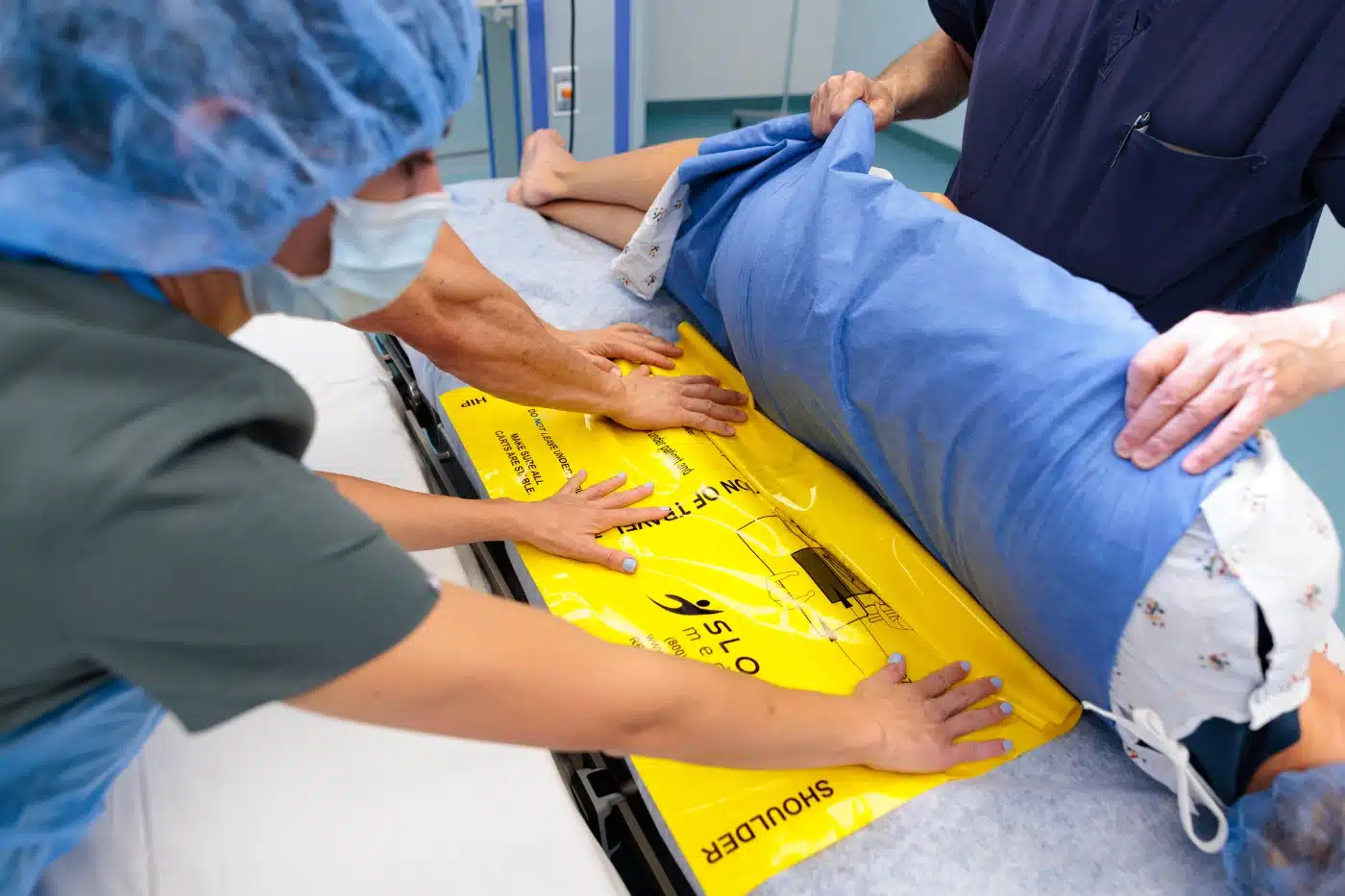
When it comes to autopsy work, the materials used can make a world of difference in safety. Surgical-grade disposable transfer sheets keep more infectious material with the deceased than traditional stretcher sheets are capable of doing.
Patient transfer sheets, like ezGLIDE, are engineered to be impermeable, reducing contamination risks. They are designed to guard surfaces and workers against bloodborne illnesses and dangerous pathogens.
Meanwhile, traditional stretcher sheets may not provide the same level of barrier protection, depending on the material chosen in their manufacture. In death care, exposure to high-volume fluids is possible; opting for disposable transfer sheets ensures greater safety against fluidborne disease.
Choosing the Right PPE Apron for Death Care
PPE aprons are commonly used in death care, but it’s important to make sure the material and construction of the apron you choose are designed to eliminate contact with fluid, not just reduce the chance.
First, look for aprons with heat-sealed seams. This design choice offers excellent protection against spills and penetration. The right apron should be made from a durable polyethylene blend. It needs to be at least 2 ml thick for added strength and impermeability.
Importantly, ensure the apron meets ASTM’s F1671 test standards. This independent test measures the material’s effectiveness against bloodborne pathogens, and anything untested isn’t likely to protect you from the smallest microbes and viruses.
Shoe Covers for Postmortem Care Workers
Medical booties and surgical leggings are also popular PPE choices in the death care industry. No one wants to ruin another pair of shoes, after all.
Leg—and foot-cover PPE protects scrubs and shoes from becoming sodden with body fluid. It also minimizes or eliminates contamination and provides a barrier against harmful substances.
For morticians and medical examiners, non-slip versions are crucial. Slips and falls can add risk to already challenging situations, and high-volume fluid release can occur in both jobs.
Non-slip soles in PPE shoe covers, medical booties, and PPE leggings all improve stability in wet or fluid-exposed environments. Smart foot protection choices ensure that death care workers can focus on their jobs, instead of just trying to stay standing in the procedure room.
Try the PPE Developed By Medical Professionals, For Medical Professionals
Death care workers deserve better PPE, starting with the basics: disposable coveralls and disposable gowns.
Coveralls offer full-body protection and have sealed seams for infection control. They’re excellent for handling bloodborne pathogens. On the other hand, disposable gowns are ideal for quick tasks. Both are valuable in occupational safety for death care workers.
Encountering bloodborne pathogens is a serious risk for many professionals in the forensic or death care industries. Forensic experts and morticians need reliable protection, just as surgeons and healthcare professionals have come to expect. Surgical-grade PPE is the best choice for mortuary, autopsy, medical examiner, funeral, and other death care professionals.
Not everyone thinks about the unseen world of death care, autopsies, and mortuaries. At Sloan Medical, we know our colleagues in this field need the same PPE designed by and for medical professionals that surgeons have come to trust.Try the superior PPE you and your team deserve. Request your free sample pack today, and you’ll stay safer during occupational exposure. No matter what risks your next shift brings, Sloan Medical has got you covered.