A veterinarian’s life is full of variety. Vets can spend their days moving between every kind of patient, from baby goats to bearded dragons. There’s bound to be a bit of blood, guts, tissue, and general goop along the way.
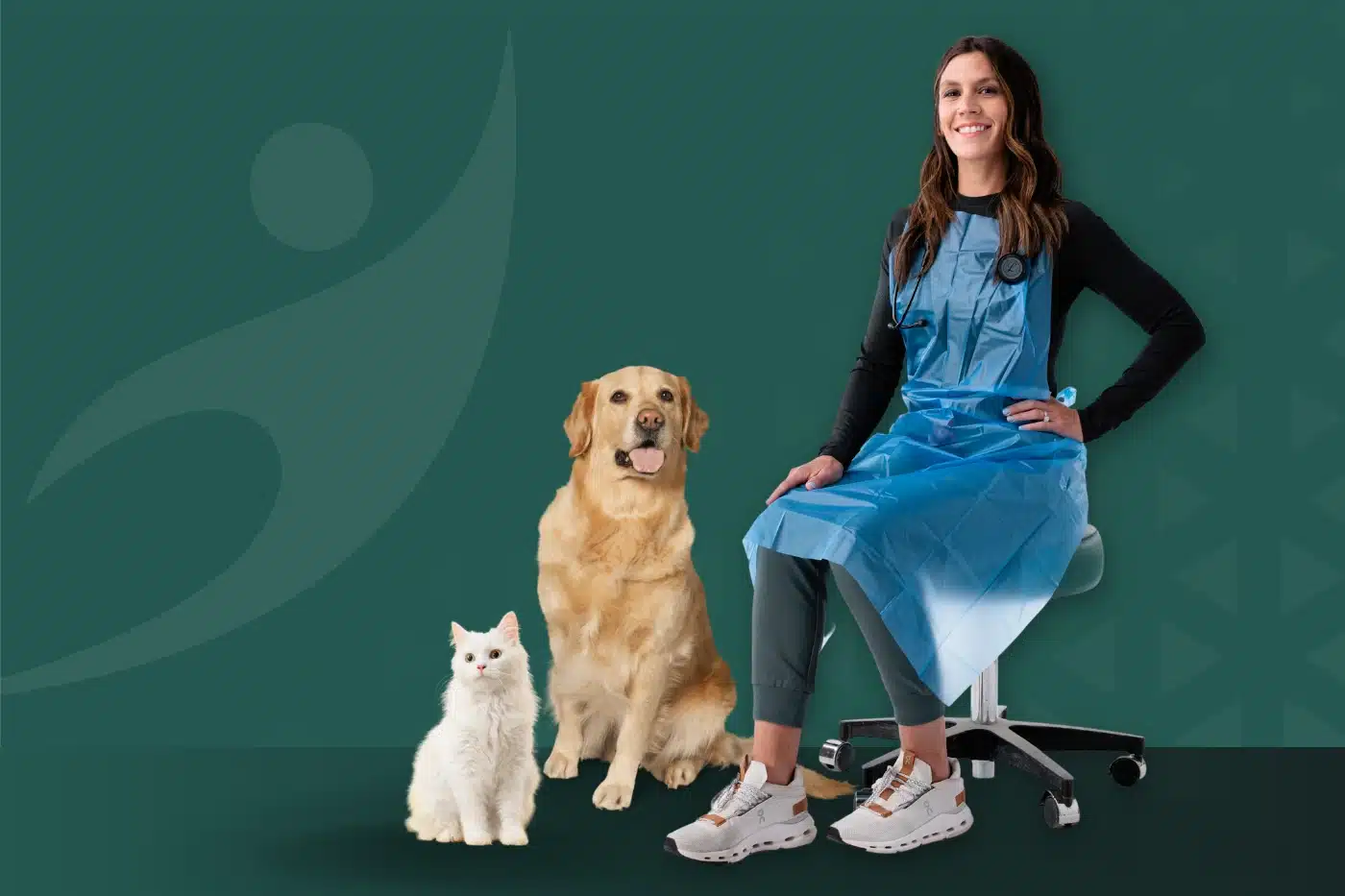
Surgical-grade PPE for veterinarians does three things: it keeps the clinician safe from zoonotic pathogens, keeps the patient’s surgical environment clean, and keeps contamination from spreading room to room – or barn to truck.
Most veterinary PPE conversations stop at “wear gloves and a gown,” and never get into the specifics that actually determine whether a product works or fails. Material impermeability, proper fit, correct donning sequence, ASTM testing standards… these details matter whether you’re in a small animal surgical suite, a large animal barn, or a vet school clinic running back-to-back orthopedic procedures.
What makes PPE “surgical-grade” in a veterinary setting?
In this case, surgical-grade can mean human-grade. Protective garments that meet ASTM F1671 — the standard for resistance to penetration by bloodborne pathogens using a viral penetration test — are tested against synthetic blood under pressure. A material passes when no pathogens bust through to the other side. That’s what qualifies a material for use in a human surgical setting, and it’s a meaningful bar for the veterinary world, too.
A gown, apron, or shoe cover that hasn’t cleared that standard might keep you dry in a minor procedure, but it won’t hold up in the kind of fluid-heavy situations veterinary professionals encounter daily: colic surgery, parturition, necropsy, orthopedic repair, or emergency surgery.
The AVMA’s guidance on personal protective equipment makes veterinarians who own clinics, or veterinary professors and their schools, responsible for “assessing workplace hazards and providing equipment appropriate to the exposure level.”
That responsibility gets complicated in vet education, where students and faculty work side by side and compliance varies. Research from Ohio State University’s College of Veterinary Medicine found that fewer than 40% of veterinary staff report using appropriate PPE consistently. The gap between “we own PPE” and “we use it correctly” is exactly what curriculum-level education is meant to close. Giving veterinary students the right PPE now, and making sure they understand why and how it was chosen, can cut the rate of zoonotic infection in the future.
Non-slip shoe covers for veterinarians: the PPE MVP
Most vet teams spend their PPE budget on gloves and gowns. Shoe covers tend to be an afterthought, which is a problem given what shoes can carry between rooms. The 2018 AAHA Infection Control, Prevention, and Biosecurity Guidelines specifically recommend shoe covers for all veterinary staff over foot baths and foot mats. Those options don’t reliably prevent contamination transfer the way a fitted, impermeable cover does.
In practice, that means equipping every person who enters a surgical or isolation area with a set of shoe covers: staff, students, and rotating residents. (The contamination risk doesn’t change based on a person’s training level!)
Sloan Medical’s SC-550 non-skid shoe cover and KH-400/KH-450 knee-high covers are ASTM F1671-tested and impermeable to fluids. The knee-high versions are especially relevant in orthopedic and large animal contexts, where splash zones extend well past the ankle. They’re also one-size-fits-all, which matters in a teaching environment where you’re outfitting a whole rotation of students without the logistics of sizing.
(Ready to see how they hold up in your clinic or class? Request a free sample and test them out.)
Large animal veterinary PPE: high risk, low compliance
Large animal practice is where PPE compliance tends to be lowest. The physical scale of large animal work creates a false sense of protection: you’re outdoors, you’re moving, the procedure feels controlled by gates and restraints. But the exposure pathways, especially for zoonotic pathogens like leptospirosis, Brucella, and Q fever, are real and serious.
For large animal veterinary PPE, the relevant products are full-coverage garments: jumpsuits, waterproof aprons for calving and foaling, and knee-high shoe covers that protect against ground-level and hoof-level splash. Sloan Medical’s SD-100 jumpsuit and AF-750 full apron are designed for exactly this kind of work. They’re disposable, too, which matters in barn environments where reusable garments become cross-contamination vehicles the moment they leave the procedure site.
The AVMA’s PPE framework notes that fit, coverage, and appropriate selection for the specific hazard are all clinician responsibilities. A coverall that bunches at the ankles exposes skin. A shoe cover that slips off on wet barn concrete creates a fall risk on top of a contamination risk.
Fit and material both have to work.
Veterinary surgery and orthopedics: the sterile field problem
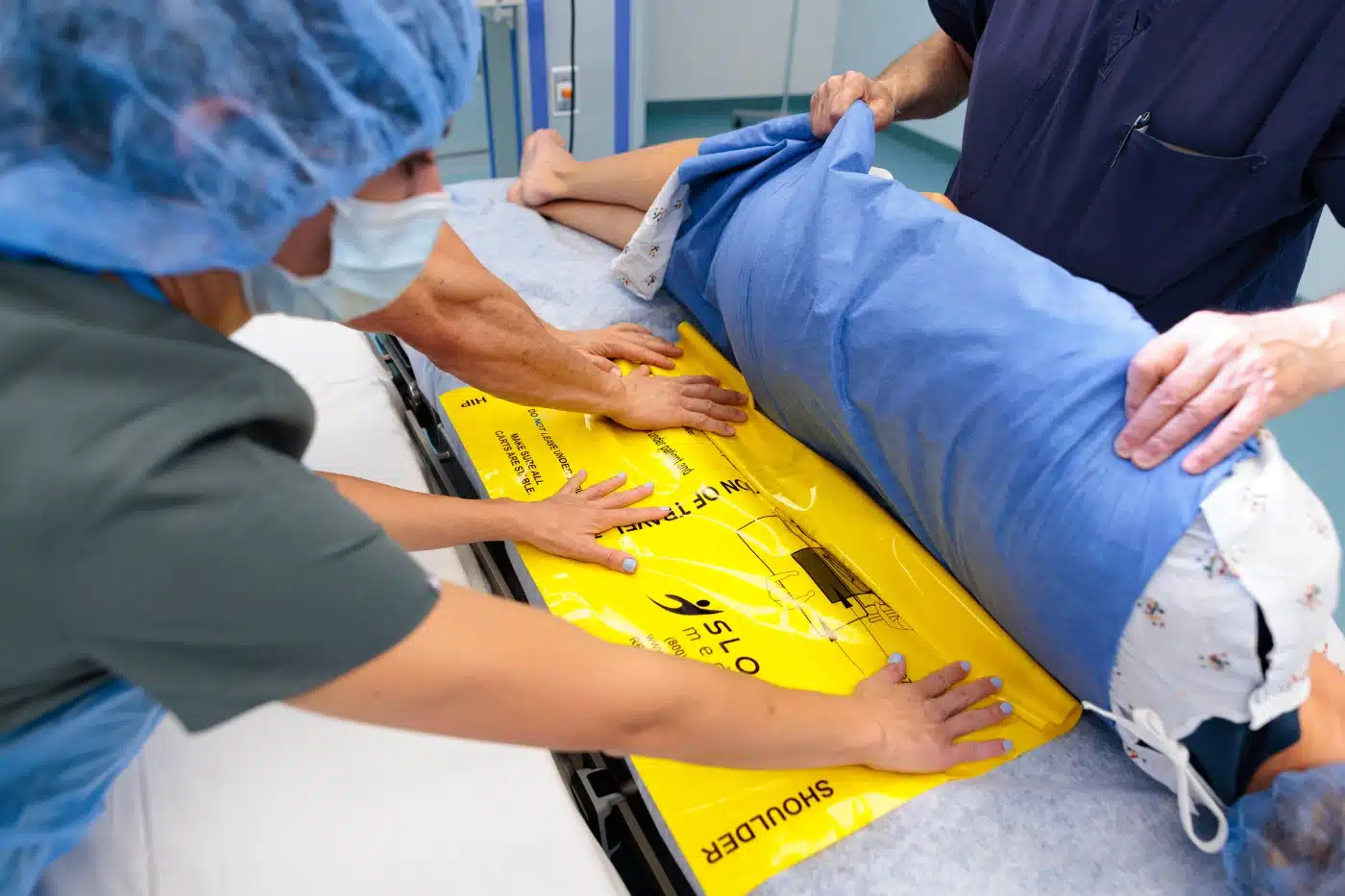
Surgical veterinary cases, especially orthopedics, operate under the same sterile field logic as human surgery. Every person entering the OR is a contamination vector, and that includes students observing from the perimeter. Cross-contamination from the OR hallway to the sterile field carried on shoe soles, on gown cuffs, or on uncovered clothing can introduce bacteria directly to an open wound.
Surgical-grade disposable garments solve a specific problem here: they remove the laundering variable. Reusable gowns depend on consistent laundering to maintain impermeability, and that consistency is hard to guarantee in a busy teaching hospital. Disposable garments start clean, are used once, and are discarded. The protection level doesn’t degrade over wash cycles.
The AAHA guidelines also cover the correct sequence for putting on and removing PPE, because the donning and doffing order is where contamination most often occurs. In a vet school environment, teaching the sequence is as important as providing the equipment. A student who removes a contaminated gown incorrectly, touching the outside surface before stripping it off, defeats the protection the gown provided during the procedure.
You can read more about how Sloan Medical’s full PPE line is designed for surgical environments and how each garment fits into a layered protection strategy.
Integrating veterinary PPE into your curriculum
For veterinary professors, equipment choice has an educational dimension beyond just protection. What students do in school is what they’ll default to in practice. If they learn to treat shoe covers as optional — or to reach for a reusable gown that hasn’t been ASTM-tested — that habit follows them.
A useful framework for vet school PPE selection:
- Match the garment to the procedure. Shoe covers and knee-highs for any room entry. Jumpsuit or gown plus apron for high-fluid procedures. Full impermeable coverage for necropsy and isolation cases.
- Require the correct donning sequence before every patient contact. Gloves go on last. Shoe covers go on before the student crosses into the procedure area. Gowns are removed inside the room before touching the door handle.
- Make disposable the default. Reusable PPE has a place, but disposable garments eliminate the laundering variable and reinforce that protection is per-procedure, not per-shift.
Sloan Medical offers free PPE samples for clinical programs evaluating their options. That’s a practical starting point: put the gear in students’ hands during a lab and see how it performs before you standardize it across a rotation.
The cross-contamination rule applies everywhere
One principle cuts across all veterinary settings, from small animal surgery to large animal fieldwork: PPE worn in a contaminated area has to stay in that area. Gloves worn during an isolation case don’t come off in the hallway. A gown touched on the outside is contaminated, and removing it without protocol transfers that contamination to the clinician’s hands and clothing.
This is where fit matters as much as material. PPE that doesn’t fit properly — a gown that gaps at the collar, shoe covers that bunch rather than seal — leaves exposure pathways no material rating can compensate for. The protection is only as good as the coverage.
Your patients are just as precious as any person. Veterinarians deserve the highest level of protection available. Test Sloan Medical’s STA-DRI garments in your own clinical environment or classroom for free. Request your sample pack here.
FAQ About PPE for Veterinarians
For veterinary surgery, the standard includes: impermeable surgical gown or jumpsuit, non-skid shoe covers or knee-high covers, exam gloves (sterile for the surgical team), and eye or face protection when splash risk exists. Garments tested to ASTM F1671 provide the highest verified level of fluid barrier protection. The donning sequence matters as much as the gear itself — shoe covers and gown go on before you enter the surgical area, and removal follows a specific doffing sequence to prevent self-contamination.
Vet school PPE requirements vary by rotation type, but at minimum, students should have disposable shoe covers or impermeable knee-high covers for any surgical or isolation room entry, a fluid-resistant gown or jumpsuit for procedures with blood or fluid exposure, and gloves appropriate to the task. Programs that standardize disposable garments reduce the laundering compliance variable and ensure protection is consistent across every student, regardless of how recently their reusable gear was cleaned. At Sloan Medical, we provide free sample packs to clinical programs evaluating their PPE options — a practical way to assess fit and performance before committing to a protocol.
For large animal infectious cases, the AVMA recommends selecting PPE based on the specific exposure routes for the pathogen in question. Leptospirosis, for example, requires dedicated footwear or shoe covers plus face protection, since the pathogen enters through mucous membranes and skin abrasions. Waterproof aprons and full-coverage jumpsuits are appropriate for parturition, necropsy, and any procedure with significant fluid exposure. The key is selecting impermeable garments that cover the specific body surfaces at risk, not general-purpose outerwear that may not hold up to the volume or type of fluid involved. Learn more about PPE requirements from the AVMA’s PPE guidance.
About Sloan Medical
Sloan Medical is a North American manufacturer of surgical-grade personal protective equipment, designed by surgeons and built for the people who work in the messiest, highest-stakes environments in healthcare and veterinary medicine. Our STA-DRI line includes impermeable shoe covers, knee-highs, jumpsuits, aprons, and leggings, all manufactured in North America and tested to ASTM F1671 standards. We serve surgical teams, veterinary clinics, teaching hospitals, and anyone who needs protection that actually performs. Explore our products at sloanmedical.com/sta-dri/