In hospitals, nursing facilities, surgical centers, and postmortem care, patient transfers are about as avoidable as death and taxes.
Patients simply have to be moved from surface to surface, with varying degrees of ability to assist, in nearly every care environment. Staff need a more flexible way to move patients, without the ergonomic and HAPI (healthcare-acquired pressure injury) risks inherent in old-school patient transfer boards.
So, how do you patient transfer using a flexible, LDPE slide sheet instead? This is your step-by-step guide to safer patient transfers, using modern materials like ezGLIDE patient transfer sheets.
Patient Transfer Sheets: Modern Healthcare Needs Modern Tools
Patient transfer boards might’ve been patented in the late 1970s, but their use is fairly ancient. The first documented use of a rigid patient transfer board was in the 6th century, under Roman Emperor Mauritius. Should your emergency department or skilled nursing facility be using the same patient transfer techniques they used to move injured soldiers in the Byzantine era?
Probably not.
When you know better, you do better – and we now know that disposable slide sheets offer superior protection from pathogens, pressure injury, and ergonomic injury for both staff and patients.
Disposables are superior to cloth slide sheets, too. Unlike traditional textiles, the special materials in a disposable slide sheet are designed to facilitate smooth movement without friction. Plus, laundered items often lose their glide properties over time and can harbor pathogens if not processed perfectly.
Infection Prevention and Caregiver Ergonomics
Mitigating the risk of caregiver injury should be a major priority for your facility.
Overall estimates from the NIH consistently show that roughly 60% to 80% of clinical staff experience physical pain or musculoskeletal symptoms linked to their daily duties. [1]
By reducing the force required for lateral transfers by up to 90%, purpose-designed patient transfer sheets actually protect the lumbar spine. As a bonus, they serve as a vital barrier against cross-contamination, a persistent risk in hospital settings with the rise of superbugs like c. auris.
Material Science: Why LDPE 4 and Low-Friction Glide Surfaces Matter
Modern slide sheets, like Sloan Medical’s ezGLIDE patient transfer sheets, utilize LDPE 4 material to create a low-friction, high-glide surface. This specialty engineered surface minimizes skin shear and friction, which are primary contributors to hospital-acquired pressure injuries (HAPIs), especially in skilled nursing facilities that serve geriatric populations. These patients have much more delicate skin, and traditional transfer boards lead to unnecessary injury.
Your Pre-Patient Transfer Checklist: Ensuring a Safe Environment
Before any movement, a systematic approach ensures staff and patient safety.
- Clearly label the patient transfer sheet for multi-day use to track its lifecycle.
- Adjust bed height to a comfortable, ergonomic level for caregivers.
- Lock all brakes on the bed and stretcher to prevent unexpected rolling.
- Clear the path of any IV lines, cables, or equipment that could obstruct the movement.
Step-by-Step Guide: How to Transfer a Patient With a Slide Sheet
Follow these simple, essential steps to safely use a disposable slide sheet for a lateral transfer.
Proper technique is required to maximize the benefits of safe patient handling.
- Communicate the transfer steps to the patient to reduce anxiety.
- Perform a log-roll to center the patient on the slide sheet.
- Ensure the low-friction surface is positioned directly beneath the patient’s center of gravity.
- Unfold and smooth the material thoroughly to eliminate friction points.
Executing a Safe “Bed-to-Stretcher” Lateral Patient Transfer
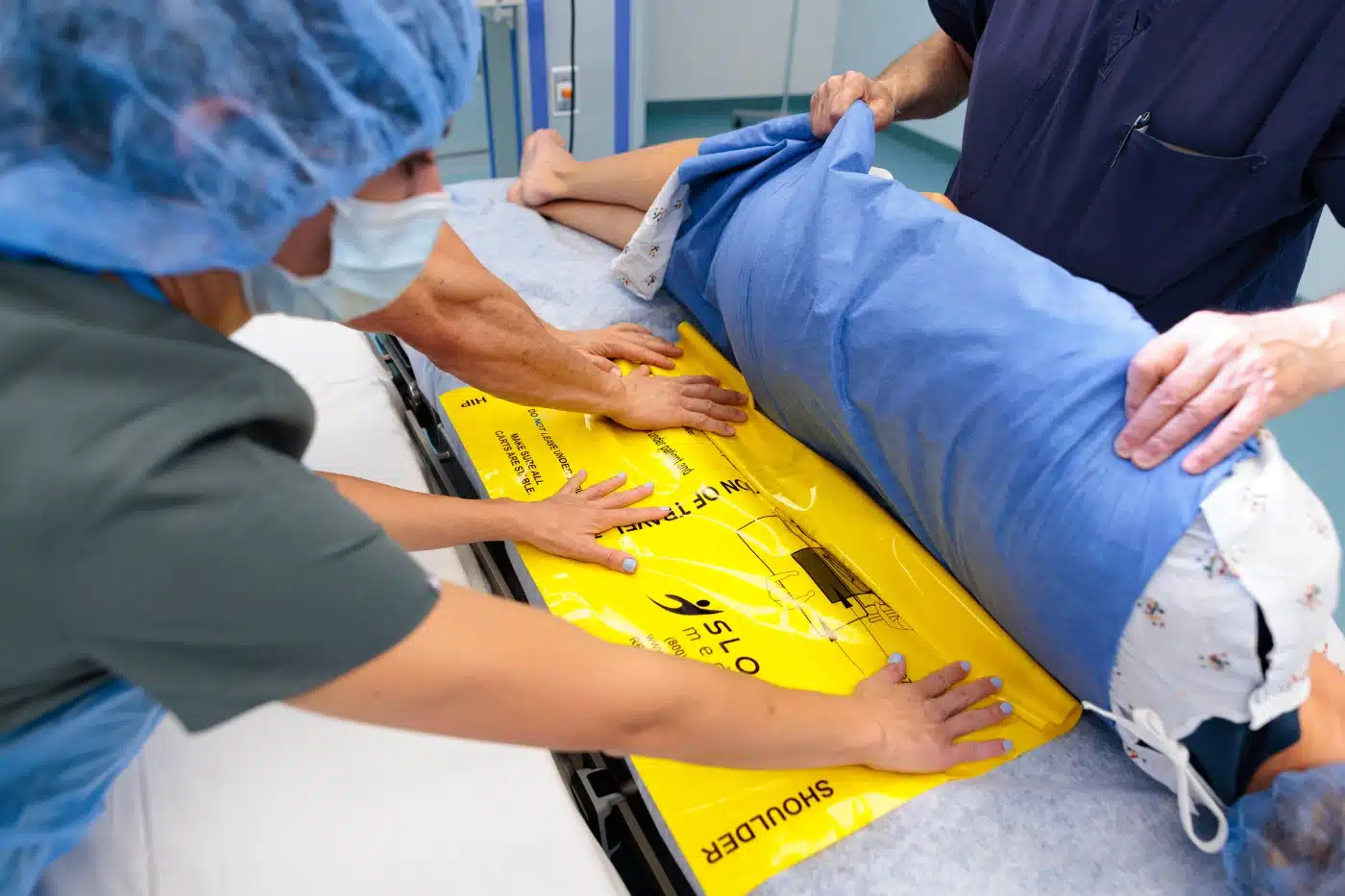
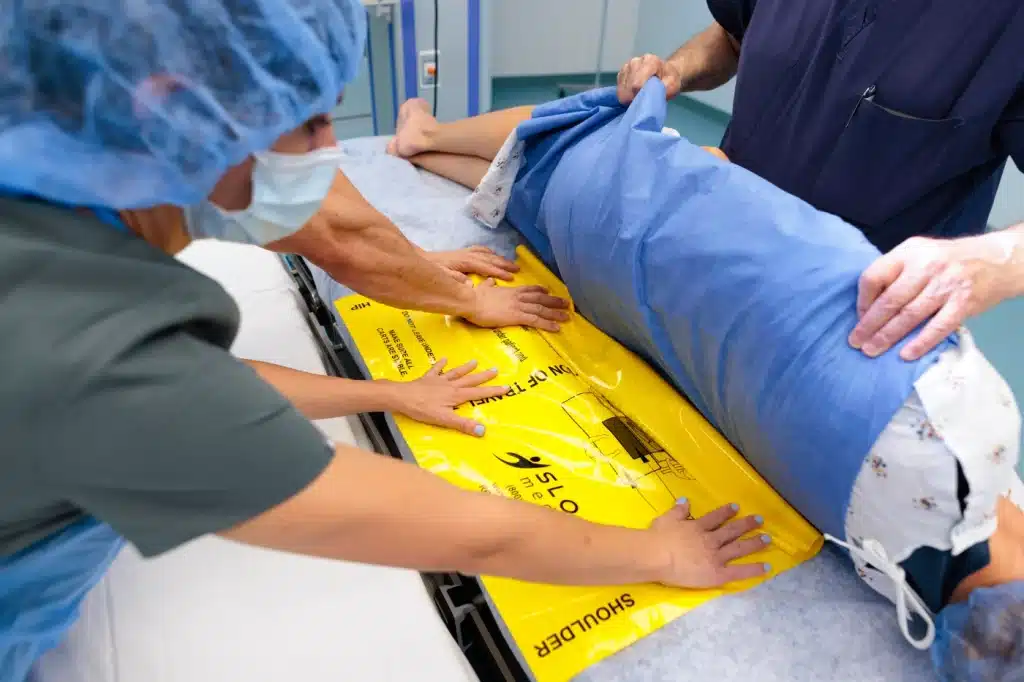
When moving a patient between surfaces, coordination is as important as the equipment itself.
- Align the transfer surfaces closely and double-check all brakes.
- Utilize a “push-pull” dynamic, with caregivers working in tandem to move the patient across the gap smoothly.
- Protect the patient’s head and neck throughout the maneuver.
- Remove the sheet safely after the transfer to maintain cleanliness.
Specialized Considerations for Bariatric Patient Handling
Managing bariatric transfers requires increased attention to weight limits and team communication.
- Always verify the weight capacity of the transfer sheet before use. If in doubt, consider using two.
- Coordinate a multi-caregiver team to ensure balanced weight distribution.
- Utilize extension handles and reach aids to maintain proper ergonomic posture.
Spare a Thought for Your Infection Control and Environmental Management Teams
Effective lifecycle management of disposable equipment helps you maximize your PPE supplies without risking transfer sheet failure or cross-contamination. Keeping these three things in mind can help you stay efficient and avoid calling out your infection control or environmental teams unnecessarily:
- Distinguish between “single-patient” (multi-use for one person) and “single-use” (disposable after one task) to optimize costs and hygiene. Choose “single-patient” options whenever possible.
- Inspect for bodily fluids before and after transfer; dispose of the sheet immediately if its integrity is compromised by rips, tears, or thinned spots after stretching.
- Utilize your facility’s correct waste management receptacles for LDPE, Class 2 recyclable materials.
Patient Transfers are Inevitable. Pain Shouldn’t Be.
Patient transfers are a necessity in any hospital, surgical center, or nursing home, and you have options for the tools you use to make it easier.
Adopting high-quality disposable slide sheets transforms the safety profile of a healthcare unit. By prioritizing ergonomic design, infection control, and proper technique, your facility can cut the risk of caregiver and patient injury, and improve the overall patient experience.
If you’re looking for a patient transfer option that’s more affordable, truly impermeable to blood- and fluidborne contaminants, and enhances your infection control and safe patient handling protocols, ezGLIDE has your back. (And your knees… and your wrists!)
But don’t just take our word for it. Order a sample and give ezGLIDE a try for yourself.
About Sloan Medical
From the constant threat of getting wet during procedures to those back-breaking patient transfers, there’s plenty of change you’d like to see change in your industry.
That’s where we come in.
At Sloan Medical, our goal is simple: Manufacture the highest quality personal protective equipment for medical professionals, death care professionals, and food processors.
Our product lines have been perfected over our 30+ years in business and are guaranteed to perform in all types of environments. Additionally, our products offer easy cleanup, and provide total protection all at reasonable prices. For disposable protective clothing and patient transfer PPE that performs, Sloan Medical is here to help.